The Quality Measure for Discharge Self-Care Score estimates the percentage of short-stay residents who meet or exceed their expected discharge self-care score. This is an Outcome Based Measure and is part of the Quality Reporting Program (QRP). It further impacts Care Compare and Five Star.
The Self-Care items and coding utilized for this measure are:
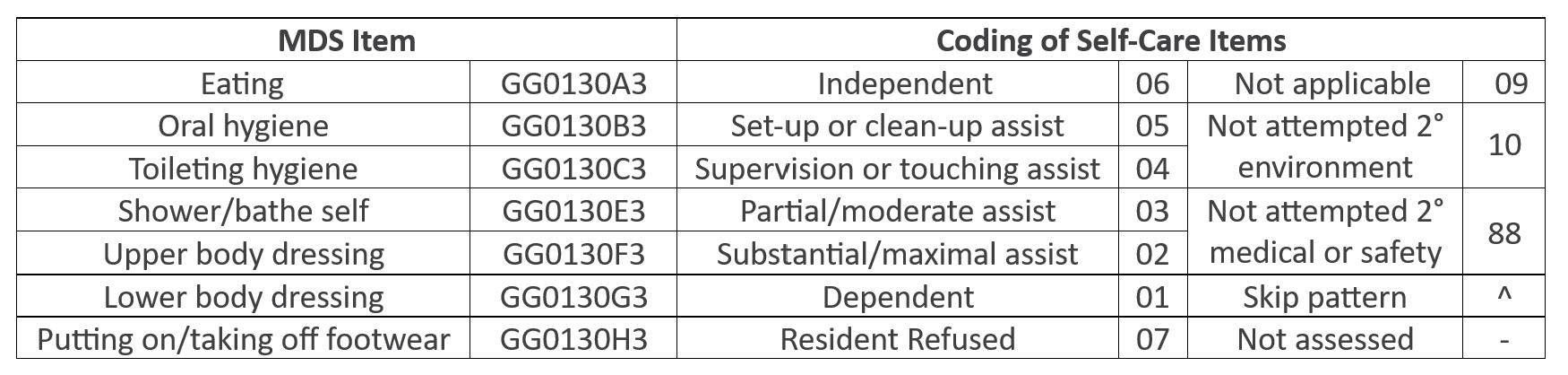
The numerator is the total number of SNF Medicare Part A stays, or Type 1 stays, in the denominator, with an observed discharge self-care score equal or higher than the calculated expected discharge self-care score. The observed discharge self-care score is calculated as follows:
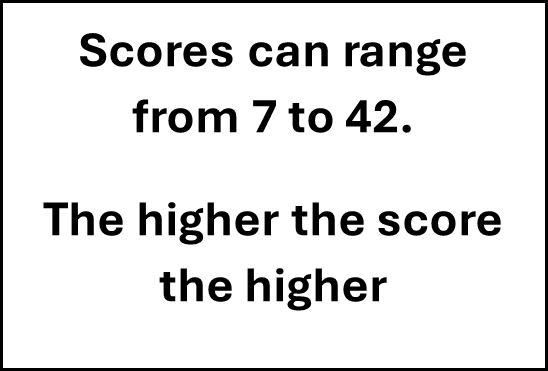
- Determine the value.
- If code is between 01 and 06, use the code value.
- If code is 07, 09, 10, or 88, recode to 01 and use this as the value.
- If item is skipped (^), dashed (-), or missing, recode to 01 and use this as the value.
- Sum the values of the discharge self-care items to establish a discharge self-care score for each Type 1 Stay record.
The expected self-care discharge score is calculated using an intercept and regression coefficient calculation, which factors in the covariates.
The denominator for this measure is the total number of Type 1 SNF Stays, except those meeting the exclusion criteria. SNF stays are excluded from this measure based on the following:
- It is an incomplete SNF stay, which would include unplanned discharge, discharge to an acute, long-term, or psychiatric hospital, stay of less than 3 days, or the resident expired during the stay.
- Resident has certain medical condition at admission, including coma, persistent vegetative state, complete tetraplegia, severe brain damage, locked-in syndrome, or severe anoxic brain damage, cerebral edema, or compression of brain.
- Resident is younger than 18 years of age.
- Resident is discharged to hospice or received hospice while a resident.
The target period for this measure is 12 months. All stays the resident had in the 12 months are included.

This measure is risk-adjusted. The covariates for risk-adjustment are as follows:
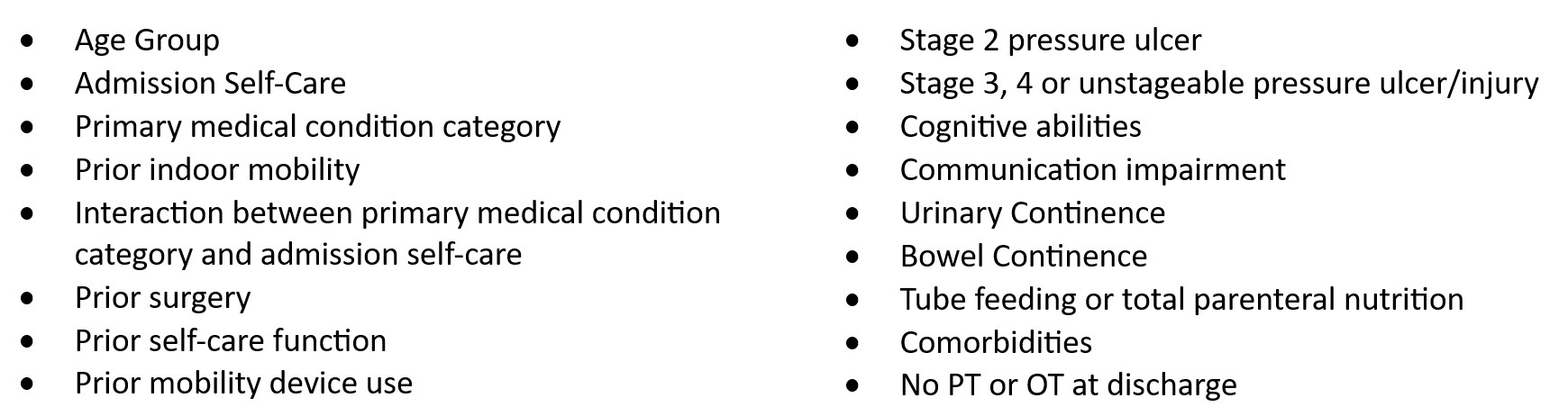
Data for these covariates is derived from the admission assessment included in the targeted SNF stay.
This Outcome Based Measure affects the QRP, as stated above, and as such impacts the Annual Percentage Update (APU). The APU can lead to an up to 2% reduction in payment if data is not submitted for 100% of MDS assessments or performance is poor.
To ensure successful outcomes, an Interdisciplinary Team approach should be utilized to address issues and progress the resident toward a more independent level of function:

- Appropriate goal development based on the resident’s wants and needs.
- Assessment, recommendations, and attainment of needed equipment and environmental modifications to foster independence.
- Assessment, education, and assistance with self-care tasks appropriate to the resident’s condition.
- Assessment and treatment for conditions impeding progress and limiting participation, i.e., depression affecting engagement with therapy, nutrition affecting stamina and strength, wounds impeding movement, pain impacting function, etc.
- Understanding of the resident’s current and evolving level of assistance by the entire care team to allow the resident the needed time, equipment, and level of assistance to complete self-care tasks as independently as possible on a consistent basis.
To foster positive outcomes, teamwork among the Interdisciplinary Team, the resident, and their family is essential to progress.
To learn more about the Quality Reporting Program, go to Skilled Nursing Facility (SNF) Quality Reporting Program (QRP) | CMS.